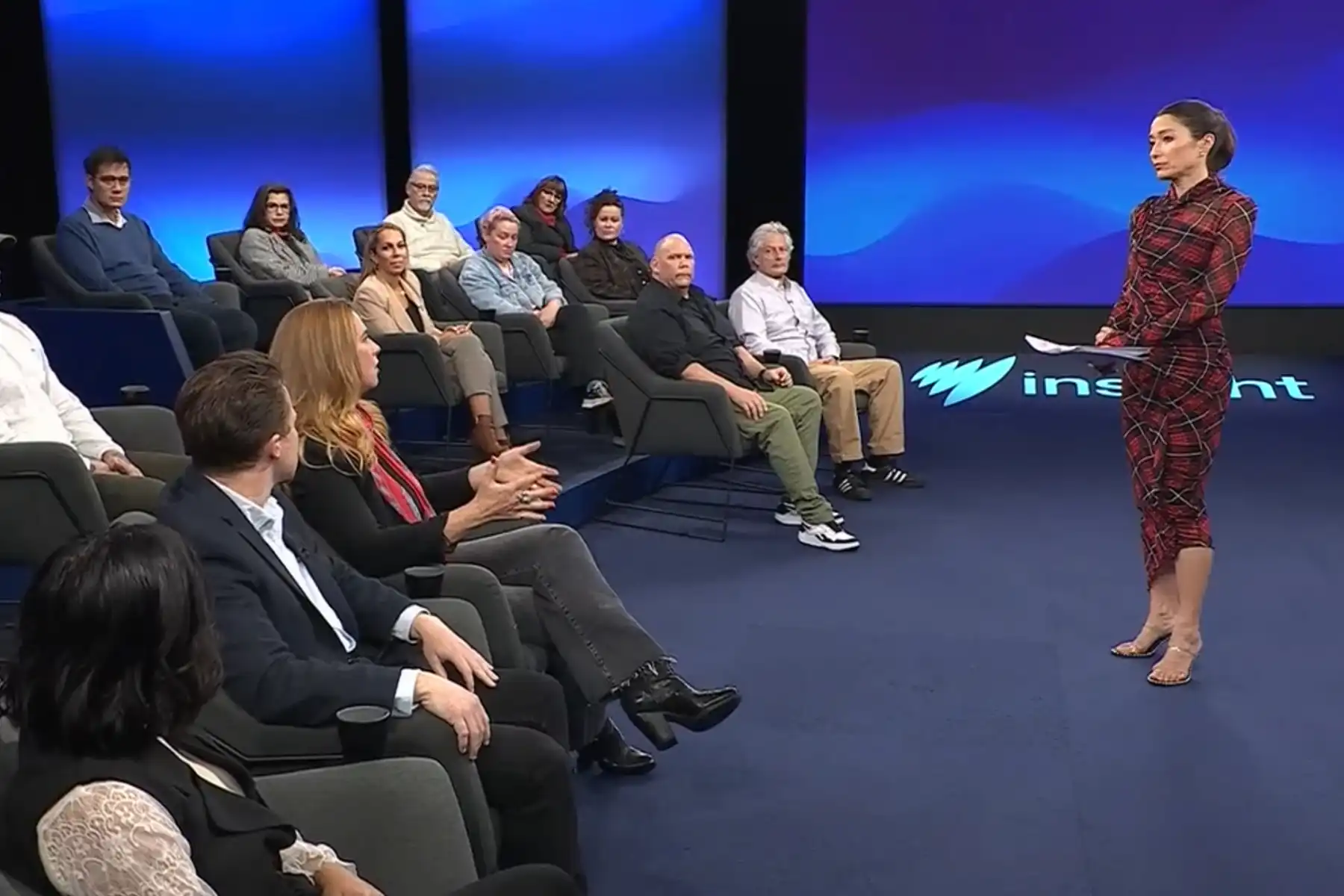
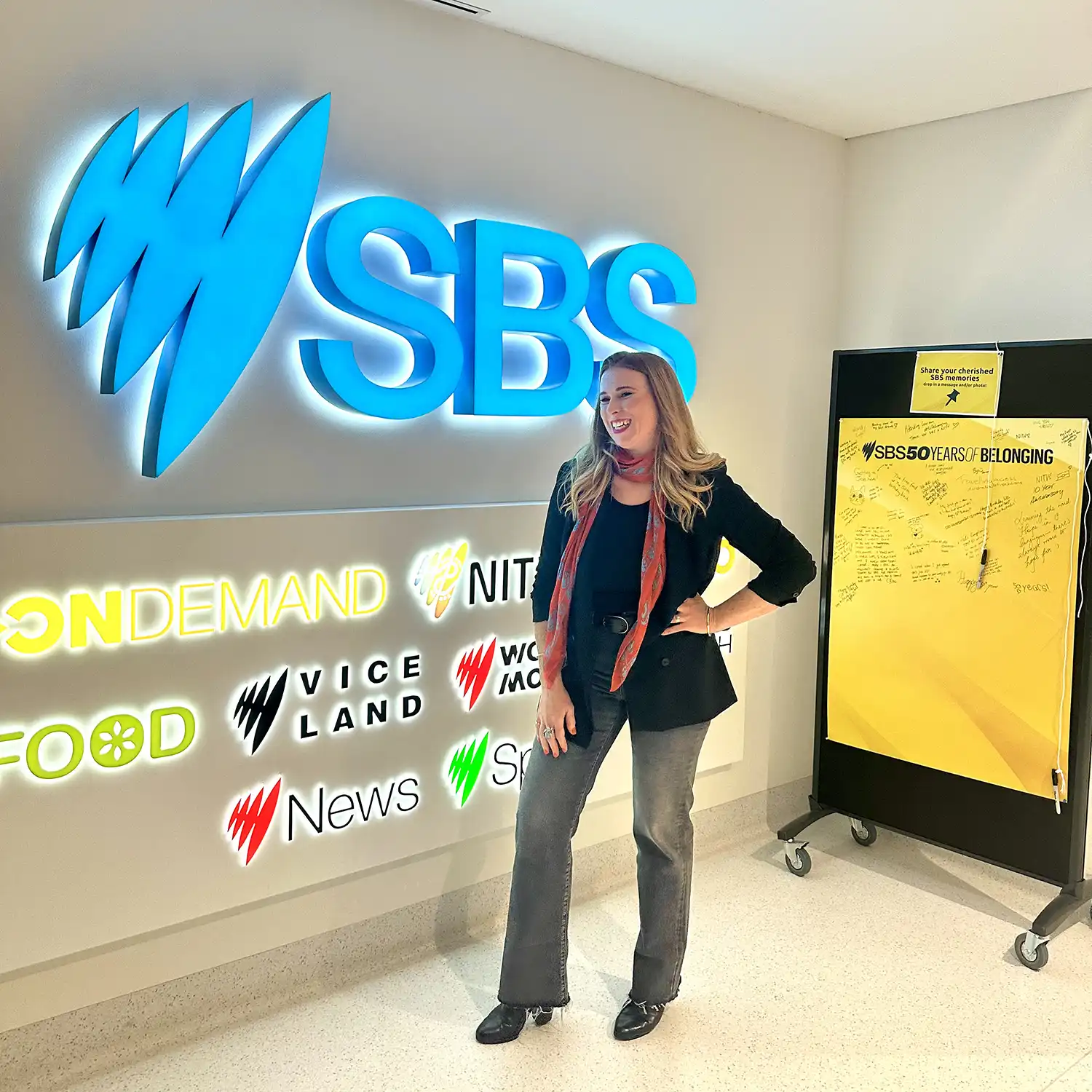
One man risked his life to stop a killer, with a milk crate.
One woman killed her husband to save herself and her unborn child.
One man, raised by notorious gangland parents, broke the cycle to become a leader, mental health advocate, and crocodile conservationist.
One couple’s baby was killed by a criminal who went largely unpunished; they turned their grief into a legacy, creating legislation in her name.
And I was there too. Because 16 years ago, I was mugged and beaten. I never told anyone. I just got up the next day and carried on like nothing had happened. With damaged teeth, a broken wrist, and cracked ribs.
For those unfamiliar, Insight on SBS is a forum for deep, nuanced conversations around significant, often sensitive issues. It has informed the model I use to facilitate conversations in my own consulting and training, most recently on intergenerational relationships in the workplace.
Insight is an exceptional example of how we can have difficult conversations with absolute respect, seeing each other’s humanity. I was honoured to be invited to share and to hear the devastating, shocking, and inspiring experiences of ordinary people who faced extraordinary events.
One thing we all shared: No matter how much you think you know how you’ll react in a shocking situation, you don’t.
However well-trained or prepared you believe yourself to be, you can never know your response until it happens to you.
What really struck me, sitting in that room, was this: people don’t behave in purely logical ways when faced with the unexpected. And yet, as a society, we often judge others (and ourselves) through a strictly logical lens:
“Why didn’t she say something?”
“Why didn’t they leave?”
This lack of empathy fosters shame. It silences people. When someone has experienced something shocking, they are vulnerable. They often don’t have the resilience to defend or justify their response.
Speaking up may be the bravest thing they ever do.
We have a responsibility to listen — with kindness, curiosity, and openness. Not logic.
I believe the antidote to shame and isolation starts with us being mindful of our words, our tone, and our presence when someone shares their experience.
It is not a “story.” That word suggests fiction.
It is an experience. Unique to the person speaking.
A culture that silences these experiences is one that enables cruelty, inhumanity, and a dangerous lack of inquiry.
Here’s the takeaway;
- For people to speak up, they must believe they will be believed.
- Each of us can create that safe space — one open, curious, kind conversation at a time.
Ask questions later. First, listen.
“Caught up in a crime” on SBS On Demand now.